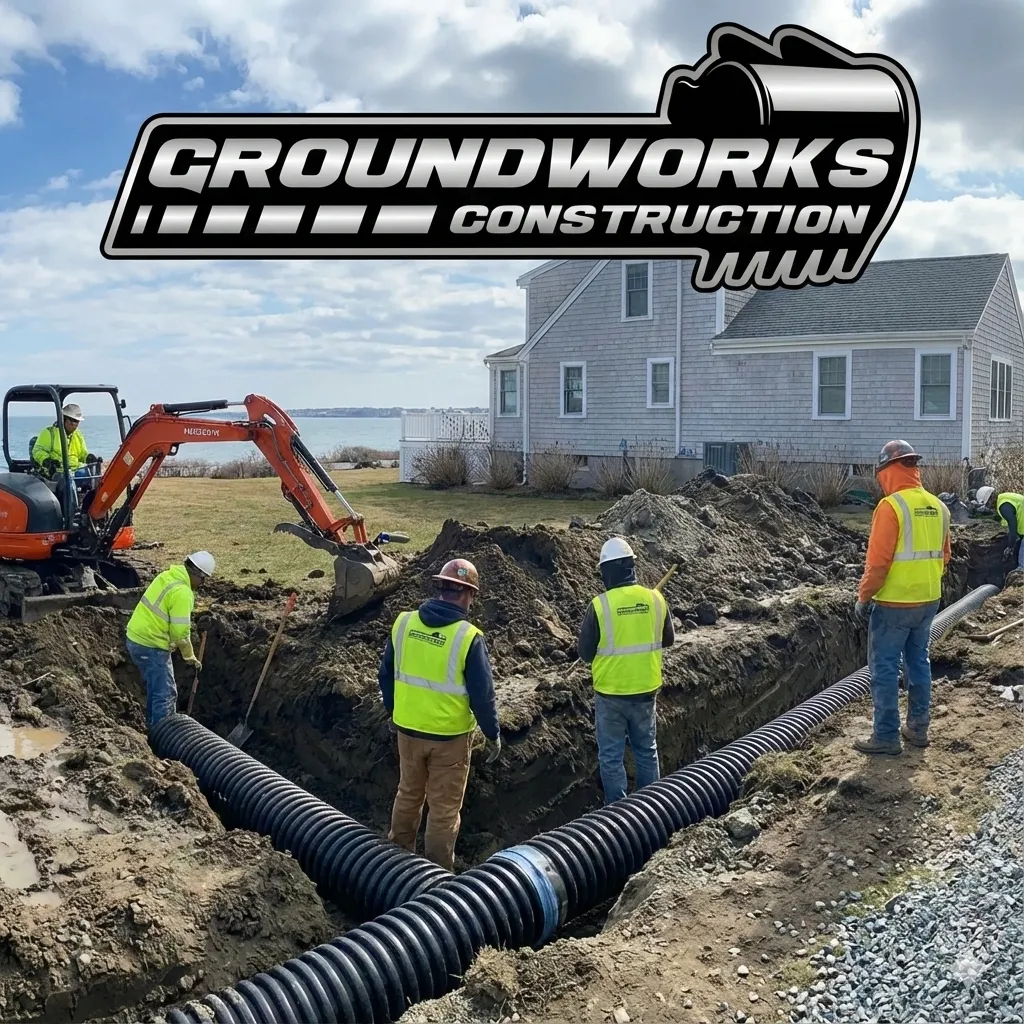
Five Signs You’ve Found the Right Drainage Contractor Near Newport, R
Newport, RI Homeowners: Do You Actually Need a Drainage Systems Contractor?
If you live in or near Newport, you already know what heavy rain can do. One hour of bad weather and your yard looks like a pond. Your basement smells damp. The lawn feels spongy. You put down more mulch, dig a shallow trench, or run a box-store pump and the water still wins.
We see you. You’re busy. You’ve got a family, work, and a house that should feel solid and dry. When water keeps showing up where it shouldn’t, it’s frustrating and a little scary. You might be worried about mold, foundation cracks, or the cost to fix it “the right way.” That fear is real.
From our side of the shovel: the right drainage design removes water quietly, day in and day out, so you don’t have to think about it. The problem is, not every contractor understands Newport’s coastal soils, high water tables, and stormwater rules. That’s why choosing the right team matters more than the trench itself.
Below are the five signs you’ve found the right drainage systems contractor in Newport, RI—plus what our process looks like, what drives cost, common systems compared, and mistakes to avoid.

Sign #1: The Contractor Understands Newport’s Coastal Soil, Slope, and Stormwater Patterns
Newport isn’t one-size-fits-all. You’ve got pockets of sandy, fast-draining soil near the coast, finer silts and loams in older neighborhoods, and plenty of spots with ledge hiding just under the grass. Add in nor’easters, wind-driven rain, and tides that push the water table up, and you’ve got a unique drainage puzzle.
A good contractor will:
Ask about your yard’s history. Where does water pool? How long does it linger after storms? Any seasonal changes?
Study your slope and runoff. Water follows gravity. We map the high points, low points, and the path water already wants to take.
Check soil behavior. Sands drain fast; clays hold water. We test how your soil absorbs moisture, not just how it looks.
Look beyond your fence. Your neighbors’ grades, downspout locations, and street drainage can all affect your yard.
If a contractor talks only about a single “miracle” solution without studying your property, keep looking. Newport properties need targeted solutions, not guesses.
Sign #2: Clear, Itemized Pricing for French Drains, Dry Wells, Channel Drains, and Sump Pumps
Surprises should be for birthdays, not invoices. Itemized pricing helps you see exactly what you’re paying for and why.
Look for proposals that break down:
Site prep and protection. Grass protection, walkway covers, plant preservation.
Excavation and materials. Linear feet of trench, pipe type and diameter, gravel quantity, filter fabric, basins, catch basins, and dry well capacity.
Labor and equipment. How many crew members, what machines, and estimated hours.
Connections and discharge. Where the water will go (daylight, dry well, approved storm tie-in), with fittings and backflow prevention where needed.
Restoration. Topsoil, seed, sod, paver reset, asphalt patching, or mulch.
Ballpark ranges can help you plan, but the line items are where trust is built. You should be able to track every dollar to a task or material.
Sign #3: Proven Local Results—Newport Project Photos, References, and Reviews You Can Verify
Pretty words don’t move water; proven work does. The right contractor will show you:
Before-and-after photos from actual Newport or Aquidneck Island jobs, not stock images.
Reference homes you can drive by (when homeowners agree).
Verified reviews that mention real problems soggy lawns, wet basements and the fixes that worked.
Case briefs that describe what was installed, why, and how performance looks a year later.
If all you hear is “we do quality work,” ask for proof politely but firmly. A contractor who’s proud of their craftsmanship will welcome it.
Sign #4: Licensed, Insured, and Permit-Ready in Rhode Island (No Code Shortcuts, Ever)
Drainage work seems simple: dig trench, lay pipe, bury pipe. In reality, you’re touching grading, utilities, and sometimes the municipal storm system. That means rules. The right contractor:
Holds proper licensing and insurance for excavation and site work.
Pulls permits when required and coordinates inspections where needed.
Calls Dig Safe before a shovel hits the ground.
Plans discharge legally. No dumping onto the street, neighbor’s yard, or wetlands.
Documents materials and slopes. A 1%–2% fall is common for gravity drains; it should be measured, not guessed.
Shortcuts can lead to fines, neighbor disputes, or a system that fails when you need it most. Compliance is part of doing it right.
Sign #5: A Custom Drainage Design for Your Property—Not a One-Size-Fits-All Kit
Real drainage design aims water, not just away from the house, but to a safe exit. That could mean a French drain along a foundation, a channel drain at the drive, a surface basin to catch low-spot water, a dry well to handle roof runoff, or a sump pump where gravity can’t help. Often it’s a combo of two or three pieces working together.
A custom plan should include:
A clear map showing trench routes, basin locations, pipe sizes, and discharge points.
Expected water volumes (roof areas, slope flow) and how the system handles peak storms.
Material specs (perforated vs. solid pipe, washed stone size, geotextile type).
How it ties into your landscaping. Clean lines, minimal visible hardware, and smart restoration.
If your home sits lower than the street, or your yard is flat, gravity might not cut it. A good designer will say so and include a pump or dry well with the right capacity.
Bonus Sign: Real Warranties and Maintenance Plans That Protect Your Investment
Water problems tend to return to the easiest path. That’s why systems need both a warranty and simple care:
Workmanship warranty. Covers installation quality settling trenches, fittings, slopes, and connections.
Material warranty. Pipe, basins, pumps, and controls carry manufacturer coverage.
Maintenance plan. Annual or seasonal inspections to flush basins, check pump operation, and confirm discharge paths are open.
Clear access points. Cleanouts or inspection ports so a future tech can service the system quickly.
The best warranty is the one you never need but you should still have it in writing.
How We Diagnose Drainage Problems in Newport: Site Walk, Water Mapping, and Soil Testing
Here’s how we approach a typical Newport home:
Conversation first. You tell us where water shows up, how long it lingers, and what fixes you’ve tried.
Site walk. We follow the water: roof edges, downspouts, patio edges, lawn low points, driveway crowns, and where you see staining or puddles.
Water mapping. We mark grades, flow paths, and discharge options. If we can, we visit right after a storm.
Soil behavior check. We dig a small test hole to see soil layers and percolation.
Utility locates. We call Dig Safe and mark all critical lines.
Design options. We give you one or two good plans, explain trade-offs, and show where each dollar goes.
Installation plan and protection. We talk about access paths, how we’ll protect grass and plantings, and how we’ll restore the yard.
The goal: a simple, durable system that makes your water problem boring.
What It Costs to Fix Common Newport Drainage Problems (And What Drives the Price)
Every property is different, but these factors drive cost more than anything:
Length and depth of trenching. Longer or deeper runs mean more excavation, stone, pipe, and labor.
Soil and ledge. Sandy soils dig fast; clay or ledge slows production and can require special equipment.
Access. Tight backyards, fences, and mature landscaping increase hand work and protection steps.
System type and capacity. Channel drains, catch basins, dry wells, and pump systems add parts and electrical work.
Restoration level. Sod vs. seed, paver reset vs. asphalt patch, plant relocation vs. replacement.
We’ll give you a clear, itemized proposal so you understand every line and which options can reduce cost without hurting performance.
Drainage Systems Compared: French Drain vs. Channel Drain vs. Dry Well vs. Sump Pump
French Drain (Subsurface Interceptor)
Best for: Water soaking into soil near foundations or pooling along lawn edges.
How it works: Perforated pipe wrapped in fabric and stone collects groundwater and carries it away.
Pros: Invisible after install, excellent for chronic soggy zones.
Watch-outs: Needs proper slope, clean stone, and a legal discharge point.
Channel Drain (Surface Grate at Driveways/Patios)
Best for: Stopping sheet flow that runs toward garages, patios, or walkouts.
How it works: A surface grate captures water and sends it to pipe or a dry well.
Pros: Immediate capture of heavy surface runoff.
Watch-outs: Needs periodic cleaning; grates must sit level with hardscape.
Dry Well (Underground Storage + Soak)
Best for: Handling roof water or overflow where there’s no daylight discharge.
How it works: Water collects in a chamber below ground and slowly seeps into soil.
Pros: Hidden, useful when gravity can’t get you to daylight.
Watch-outs: Soil must accept water; size it for real storms, not just sprinkles.
Sump Pump (Active Removal)
Best for: Basements or yards below the ideal discharge, high water tables, or flat lots.
How it works: A pump lifts water to a safe discharge point.
Pros: Works where gravity fails; controllable and serviceable.
Watch-outs: Needs power, backup planning, and routine checks.
A smart design often blends two or three of these. For example, a French drain to intercept groundwater, a channel drain across the drive, and a dry well to handle roof runoff—each handling a different part of the problem.
Costly Newport Mistakes to Avoid: Pipe Slopes, Discharge Locations, and Landscaping Damage
We’re called in to fix a lot of “almost right” systems. The usual culprits:
Flat or back-pitched pipe. Water can’t move uphill. Even a small back-pitch turns a drain into a bathtub.
No filter fabric. Soil creeps into stone and clogs the system. Fabric keeps the pathway open.
Wrong outlet location. Discharging into a neighbor’s yard or a sidewalk causes problems—and complaints.
Undersized dry wells. They work great—until the first big storm. Size for peak events, not the average shower.
Forgotten restoration. Trenches settle. Pavers shift. Plan for compaction and real restoration, not a quick rake and go.
When in doubt, ask your contractor to show slopes, outlet paths, and restoration steps on the plan before you sign.
Our Rhode Island Service Area: Bristol, Kent, Newport, Providence, and Washington Counties
We’re based in West Warwick, and we work across:
Newport County: Newport, Middletown, Portsmouth, Tiverton, Little Compton
Bristol County: Barrington, Bristol, Warren
Kent County: Coventry, East Greenwich, Warwick, West Warwick
Providence County: Cranston, Providence, North Providence, Johnston, and beyond
Washington County: Narragansett, South Kingstown, North Kingstown, Charlestown, Westerly
If you’re on the border or not sure you’re in range, ask. We’ll let you know if we can help or recommend someone who can.
FAQ: Newport, RI Drainage Systems—Permits, Timelines, Winter Work, and Yard Restoration
Do I need a permit?
Sometimes. It depends on discharge location, tie-ins, and scope. We handle the paperwork when it’s required.
How long does a typical job take?
Small channel drain installs can be a day. Larger French drain and dry well systems take several days. Complex projects with pumps or paver resets may run a week or more. We’ll give you a schedule upfront.
Can you work in winter?
Yes, if the ground isn’t frozen solid and access is safe. Winter installs can be fine for drainage, especially when you’re trying to avoid spring flooding.
Will you wreck my lawn?
We plan access routes, use ground protection, and restore disturbed areas. Seed or sod is your choice. We also reset pavers and patch asphalt as needed.
What about maintenance?
We recommend a quick annual check: clean grates, flush basins, test pumps. It’s simple and keeps the system ready for the big storms.
Next Steps: Request a Site Visit from GroundWorks Construction, Inc.
If you’re tired of babysitting puddles, guessing at quick fixes, or worrying about your basement after every storm, we’re ready to help. We’ll walk the site, map the water, and design a clean, durable system for your property in Newport or anywhere in the surrounding counties we serve.
Here’s what you’ll get from us:
A plan for moving water away from your home
Itemized, transparent pricing with options and trade-offs
Local references and real photos so you can see results
A tidy jobsite and true restoration when we’re done
A warranty and simple maintenance plan that protects your investment
Request your site visit. Let’s make your water problem boring so your home can feel dry, safe, and easy again.
